Health and Safety Policy for Removal Companies Chiswick
 This Health and Safety Policy sets out the standards expected from a professional removal company in Chiswick when planning and carrying out domestic or commercial moves. The purpose of the policy is to protect employees, clients, contractors, visitors, and members of the public from avoidable harm. Every relocation involves physical handling, transport, access issues, and time pressure, so safe working practices must remain central at every stage. This policy applies to all staff involved in packing, lifting, loading, driving, storage, and unpacking tasks.
We recognise that moving goods safely is not simply about avoiding accidents; it is also about maintaining service quality, preventing damage, and ensuring that operations are legally compliant. All personnel are expected to act responsibly, follow instructions, and report concerns immediately. The company will provide suitable equipment, training, and supervision so that each task is completed in a controlled and considered manner. A strong safety culture supports both staff wellbeing and customer confidence.
 The following principles guide our work: risks should be identified early, hazards should be controlled before work begins, and no job should proceed if it cannot be carried out safely. This approach applies whether the team is handling a small apartment move, a large office relocation, or a specialist item requiring extra care. The same standards apply to every Chiswick removals team, regardless of schedule or location.
Responsibilities and Safe Working Standards
Management is responsible for implementing this policy, reviewing procedures, and ensuring that staff have the resources needed to work safely. Supervisors must assess the work environment, confirm that tasks are suitable for the crew assigned, and stop work if conditions become unsafe. Employees must take reasonable care of their own safety and that of others, use protective equipment correctly, and comply with all instructions. A reliable removals service depends on everyone understanding their role in preventing incidents.
Before any move, a risk assessment should be completed to identify potential hazards such as heavy lifting, restricted access, slippery surfaces, poor lighting, traffic movement, fragile items, and unstable loads. Where necessary, additional measures may include manual handling aids, route planning, warning signage, or extra staffing. The objective is to reduce exposure to risk through practical controls rather than relying on speed or routine.
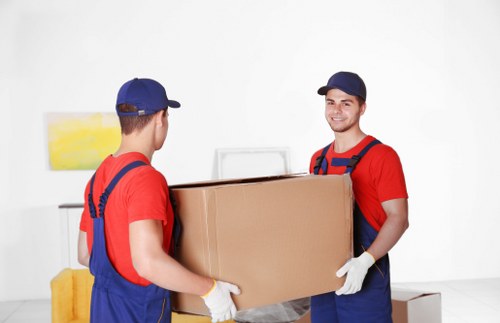
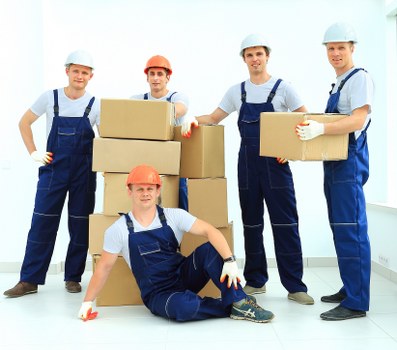 Manual handling remains one of the most significant risks in the industry. Staff must be trained to assess weight, shape, balance, and lifting posture before attempting to move an item. Team lifts should be used where appropriate, and individuals should never be expected to carry loads beyond their capability. Proper stretching, steady movement, and clear communication are essential. When handling house removals in Chiswick, every item should be moved with attention to both personal safety and property protection.
Equipment, Vehicles, and Working Environment
All equipment used in the moving process must be suitable for purpose, regularly inspected, and maintained in good working order. This includes trolleys, straps, blankets, ramps, gloves, and any lifting aids. Damaged equipment must be removed from service immediately. Vehicles should also be checked before use to confirm that brakes, tyres, loading restraints, mirrors, and lights are functioning correctly. Safe transport is a core part of any moving company policy.
Loading and unloading must be planned to avoid instability and injury. Heavy items should be placed securely at the bottom of the vehicle and restrained to prevent shifting during transit. Fragile items should be wrapped, labelled, and separated from heavier goods. Staff must remain alert while working around vehicles, as reversing, turning, and opening tail lifts can create additional hazards. Pedestrians and other workers should never be placed at risk due to poor positioning or rushed movement.
Work areas must be kept clear, tidy, and accessible. Floors should be checked for trip hazards, loose cables, wet patches, or sharp objects. If a property has narrow staircases, awkward corners, low ceilings, or limited parking access, the team should plan an appropriate method before starting. A disciplined removal service should adapt to the environment rather than forcing unsafe methods. Where conditions change during the job, the assessment must be updated accordingly.
Training, Reporting, and Emergency Procedures
All employees must receive training relevant to their duties, including manual handling, equipment use, vehicle safety, fire awareness, and incident reporting. New starters should be supervised until they demonstrate competence. Refresher training should be provided when procedures change or when monitoring identifies recurring issues. Safety knowledge is most effective when it is supported by routine practice and clear expectations.
Any accident, near miss, injury, or unsafe condition must be reported without delay. Reports should be reviewed so that corrective action can be taken and similar events prevented in the future. This may involve revising lifting techniques, improving scheduling, replacing equipment, or introducing additional supervision. A proactive removal company treats every report as an opportunity to improve rather than as a formality.
In the event of an emergency, staff must remain calm, follow the site-specific plan, and contact the appropriate emergency services if required. First aid arrangements should be available, and at least one suitably trained person should be present where possible. Fire exits, access routes, and assembly points must not be blocked by stock, packaging, or vehicles.  If an incident occurs during a move, preserving life and preventing further harm always takes priority over property or schedule.
Client and Public Safety
Clients, tenants, building staff, and passers-by may be affected by removal activities, so communication is essential. Customers should be informed about likely timings, access needs, and any temporary disruption. Staff should use polite, clear instructions to keep people away from active work zones. This is especially important when carrying items through communal areas, shared entrances, or public pavements. A responsible removal company in Chiswick will always consider the impact of its work on others.
Particular care should be taken when moving valuable, delicate, or unusually shaped objects. Items such as glass, antiques, electronics, and office equipment require packing and handling methods that minimise risk. Protective wrapping, correct labelling, and secure positioning all help to reduce damage and injury. If an item cannot be moved safely using available resources, the task should be paused until a safer method is identified.
 This policy will be reviewed regularly to ensure that it remains effective, practical, and aligned with current expectations. Improvements may be introduced following inspections, incidents, staff input, or changes in working methods. By maintaining consistent standards, the company supports safer operations, better service outcomes, and a healthier workplace for everyone involved in the moving process.